Annual Day Themes That Work for IT Companies
Most companies already organize employee events. The challenge is making them meaningful and effective.
The HR team carefully plans the activities, the company approves the spending. The real gap is that many of these events don't move anything that matters: not retention, not morale, not how people talk about the company once they're back at their desks.
HR teams have a lot on their plate this year. Hybrid work has pulled teams apart physically, and younger employees, particularly those under 35, are weighing up their employer on more than just the offer letter.
An event is one of the few moments where a company gets to show, rather than tell, what it actually values. But run the same format on repeat for three years and people notice.
Successful companies first decide why they are organizing an event and what results they want. Then they choose the venue and activities that help achieve those goals.
Purpose. An event built around a specific outcome — repairing cross-team relationships, recognising a strong quarter, helping a department reset after a rough stretch — performs differently than one held simply because the calendar says it's October.
Fit. What works for a 25-person product team won't necessarily translate to a 300-person shop floor.
Delivery. A good concept with weak execution still ends up forgettable.
A team outing, done properly, is more than a day away from the desks.
Done well, Team Outings and Employee Engagement Activities noticeably improve how teams collaborate day to day — particularly when there's an actual goal behind the outing, rather than booking a resort simply because it's that time of year again.
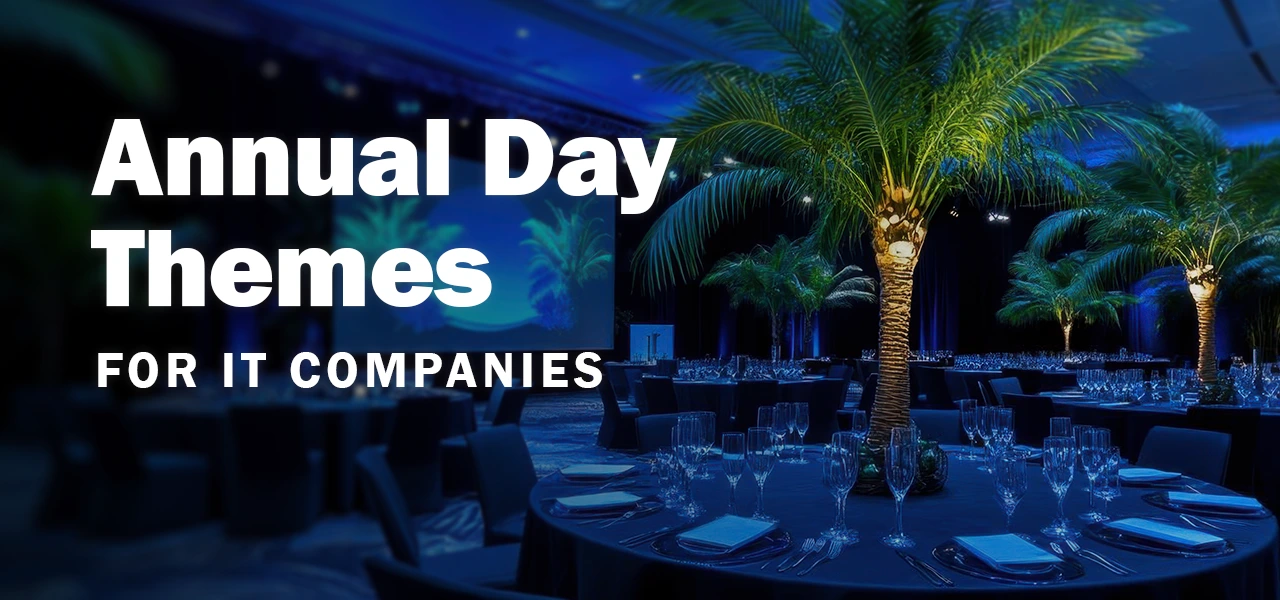
Annual Day Events are, on paper, one of the highest-impact formats a company has access to. In practice, most fall short of that potential because the format defaults to the same script.
Generic plaques handed out by category rarely land the way specific, considered recognition does.
Best suited for: Companies of all sizes that want to keep employees engaged, recognised, and motivated over the long term.
Corporate Family Day Events bring employees' families into the picture, and that single shift changes the emotional weight of the relationship between employee and employer.
Best suited for: Works well for larger companies aiming for long-term loyalty.
Burnout is now one of the more common reasons people quietly start job-hunting across Indian workplaces. Wellness-led activities address this directly rather than skirting around it.
Best suited for: Ideal for fast-paced teams or companies that have struggled with burnout.
Activities like design sprints, innovation labs, and team problem-solving help people build skills and connect with each other at the same time.
They can easily be included in a Conference Event Management Company programme, so learning and alignment happen together rather than in separate sessions.
Best suited for: Companies investing in leadership development or cross-team collaboration.
Activities like volunteering, community work, environmental drives, and employee-led charity initiatives bring teams together through shared purpose instead of just social events.
When done well, these programmes often lead to higher employee satisfaction, but they only work if they feel genuine — employees can easily spot when it's just for appearance.
Best suited for: Ideal for companies focused on ESG or social responsibility.
Peer-nominated awards, manager-led shoutouts, and milestone recognition remain among the most cost-efficient engagement tools available, provided the recognition is specific and timely rather than generic.
Most Annual Day Event Organizers build a formal recognition segment into the evening, but the smaller, quarterly versions in between are what actually sustain momentum across the year.
Best suited for: Every company type, particularly high-performance cultures where contribution often goes unnoticed.
What it drives: Better motivation, less quiet resentment, a stronger peer culture overall.
A misaligned leadership team eventually shows up across the organisation. Structured retreats that focus on facilitated discussion tend to address this more effectively than any internal memo.
Companies that treat Leadership Summits and Conferences as genuine strategy sessions, rather than a change of scenery for the same meeting, consistently get more out of the same budget.
Best suited for: Growing companies or leadership teams navigating a recent shake-up.
What it drives: Faster decisions, tighter cross-functional alignment, stronger culture signals from the top.
Large-format internal events — conferences, town halls, summits — give a company a structured way to communicate direction, mark progress, and bring the entire workforce onto the same page.
For organisations running large-scale MICE Events — dealer meets, incentive travel, large exhibitions — professional coordination stops being optional.
Best suited for: Mid-to-large companies with distributed teams or layered communication needs.
What it drives: Sharper strategic alignment, better internal communication, more clarity on where the company is headed.
For teams spread across cities, hybrid formats help remote employees stay genuine participants rather than passive viewers of a livestream.
Best suited for: Companies with hybrid or fully remote teams across India or other regions.
| Objective | Recommended Format |
|---|---|
| Improve peer relationships | Team Outings, CSR Activities |
| Recognise and retain top talent | Annual Day Events, Recognition Programmes |
| Reset after a difficult period | Wellness Retreats, Purposeful Offsites |
| Build leadership alignment | Leadership Retreats, Strategic Offsites |
| Engage families and build loyalty | Corporate Family Day Events |
| Communicate company direction | Conferences, Internal Summits |
| Upskill and develop teams | Learning Workshops, Innovation Labs |
| Include remote and hybrid teams | Hybrid Engagement Activities |
A handful of patterns keep showing up across companies treating engagement seriously this year.
Calendars over one-offs. Instead of isolated events, companies are weaving engagement activities into a full-year calendar tied to broader culture and HR goals.
Recognition that's actually personal. Generic awards are being phased out in favour of recognition that feels deliberate rather than procedural.
Hybrid by default. Distributed teams are now planned for from the outset, not bolted on as an afterthought once the in-person event is locked.
Wellness treated as strategy. Wellbeing programming has shifted from an HR checkbox to something leadership budgets for with real intent.
The main issue is not the events themselves, but the lack of clear purpose.
Most organizations struggle with similar gaps:
Instead of offering fixed packages, we focus on the real problem behind low engagement.
Then we create simple, meaningful employee experiences that:
We don't just plan events — we focus on what each company actually needs.
Erigo Events is a Corporate Event Management Company in Bangalore, working with organizations across India to create simple, engaging, and outcome-driven employee experiences.
The team's work spans Team Outing Organizers Bangalore services, Annual Day Events, Corporate Family Day Events, Leadership Retreats, Conferences, and MICE Event Organizers India programmes, covering everything from a single event to a full-year engagement calendar.
Companies exploring options with Event Planners Bangalore for their next engagement programme can use this guide as a starting point for the kinds of formats worth considering before narrowing down a brief.